
This website is intended for use by patients and caregivers in the US only.

What treatment with PALYNZIQ looks like

PALYNZIQ is a daily at-home injectable treatment

You’ll start by taking PALYNZIQ once a week. You’ll self-inject PALYNZIQ just under the skin (subcutaneously). Then, your clinic team will adjust your dose based on how you respond to treatment.


PALYNZIQ comes in prefilled syringes and is available in 3 dosage strengths:

Image of single dose syringes for palynziq
  • PALYNZIQ is only available from pharmacies that participate in PALYNZIQ REMS.
    • These pharmacies will:
    • Confirm that you’ve received and filled your prescription for autoinjectable epinephrine
    • Call you to schedule a time for PALYNZIQ to be delivered to your home
  • Store PALYNZIQ in a refrigerator at 36°F to 46°F
    • If needed, you may store PALYNZIQ at room temperature (68°F to 77°F) for up to 30 days
    • If stored at room temperature, do not put PALYNZIQ back in the refrigerator
    • Remember to write the date that you remove PALYNZIQ from the refrigerator on the carton
  • Keep PALYNZIQ in its original carton to protect it from light
  • Do not freeze or shake PALYNZIQ
  • Properly dispose of PALYNZIQ if it has been kept at room temperature for 30 days or after the expiration date, whichever comes first
  • Keep PALYNZIQ out of reach of children
  • Always inspect your prefilled syringe of PALYNZIQ:
    • Check the expiration date
    • Check to make sure the liquid is clear and colorless to pale yellow. Discard if liquid is discolored or cloudy, or if it has particles in it
    • Check to make sure the needle is not damaged or bent

If your medication has expired or the liquid is cloudy, do not use it. Discard the syringe in your sharps container. Contact your clinic team for a new prescription of PALYNZIQ.

If you miss a dose, take your next dose at the regular time. Do not take 2 doses of PALYNZIQ to make up for a missed dose.

PALYNZIQ is smaller than a flu shot

The needle used for PALYNZIQ injections is just a half an inch long. It is injected right under the skin (subcutaneously). This can make it less painful than a flu shot, which is injected into your muscle.

Image showing difference between an intramuscular injection and a subcutaneous injection

Your PALYNZIQ dose will be increased slowly so your body can get used to it.


Your highest dose may not be the dose you stay on. Your doctor will monitor your Phe levels and may decrease your PALYNZIQ dose.

Videos that can support you on your PALYNZIQ journey

A step-by-step guide on how to inject PALYNZIQ

Learn about injecting and administering PALYNZIQ with this step-by-step video.

Overcoming the fear of needles

Get more comfortable with needles and injections with a brief overview of the product, education, and support that you’ll receive when taking PALYNZIQ.

Real Talk: Self-injections

Watch adults with PKU share how their PALYNZIQ injection fits into their daily schedules.

Before injecting PALYNZIQ, talk to your healthcare provider right away if you cannot or will not use auto-injectable epinephrine to treat a severe allergic reaction. If you are pregnant or plan to become pregnant while taking PALYNZIQ, talk to your healthcare provider to discuss the risks and benefits of taking PALYNZIQ during pregnancy to you and your unborn baby. If you are breastfeeding or plan to breastfeed, talk to your healthcare provider to discuss the risks and benefits of taking PALYNZIQ while breastfeeding for you and your baby.

You’re not alone. When you start taking PALYNZIQ, your clinic team will:

  • show you how to properly inject PALYNZIQ
  • be present as you give yourself your first injection
  • confirm your ability to inject PALYNZIQ by yourself
  • teach you about the signs and symptoms of anaphylaxis, and what to do if you experience anaphylaxis
  • instruct you about how to use auto-injectable epinephrine* in case it’s needed due to anaphylaxis

*You must carry your auto-injectable epinephrine with you at all times.

Side effects can occur with PALYNZIQ

Because of the unique way PALYNZIQ works, it can cause a reaction. When a new treatment enters the body, the immune system doesn’t know what it is and may react to it. This reaction is called a “hypersensitivity event.”

A severe allergic reaction (anaphylaxis) is a type of hypersensitivity event that may be life-threatening and can happen at any time during treatment with PALYNZIQ.

1 in 10 people in clinical studies had a severe allergic reaction with PALYNZIQ.

Did You Know: Everyone who had a serious allergic reaction recovered, and none of them had any lasting problems.

You should carry your autoinjectable epinephrine pen with you at all times.

Your clinic team will prescribe autoinjectable epinephrine in case you experience a severe allergic reaction.

They will also train you about how to recognize the signs of a severe allergic reaction so you can be prepared to manage it if it happens.

These signs include:

  • Fainting (passing out)
  • Dizziness or lightheadedness
  • Sudden confusion
  • Trouble breathing or wheezing
  • Chest discomfort or chest tightness
  • Fast heart rate
  • Swelling of your face, lips, eyes, or tongue
  • Throat tightness
  • Flushed skin
  • Skin rash, itching, or raised bumps on skin
  • Nausea, vomiting, or diarrhea
  • Losing control of urine or stools

In clinical trials, about 1 in 2 people who experienced a severe allergic reaction used an autoinjectable epinephrine pen to manage it. If you experience any of these symptoms, reach out to your clinic team right away.

Remember: If you do have a serious allergic reaction with PALYNZIQ, it doesn’t always mean it will happen again. It also does not mean you need to stop taking PALYNZIQ.
7 IN 10 people who took PALYNZIQ again after having a serious allergic reaction DID NOT have another one.

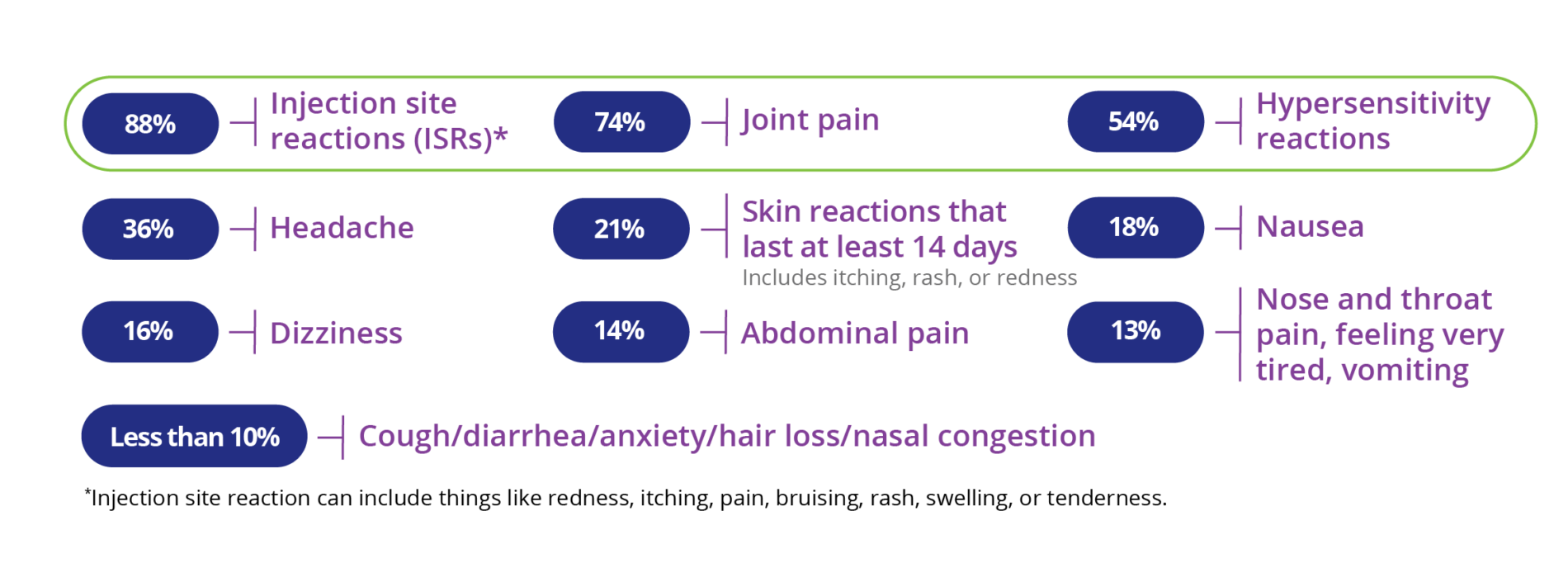
Some people taking PALYNZIQ experienced side effects when they started treatment (induction) and while finding the right dose (titration). These side effects included:

Chart showing side effects

Serious infections at the injection site have happened in people during treatment

Change (rotate) your injection site and check your injection site for redness, swelling, or tenderness before each injection. Tell your healthcare provider right away if you develop signs or symptoms of an infection at your injection site that are new, do not go away, or get worse.
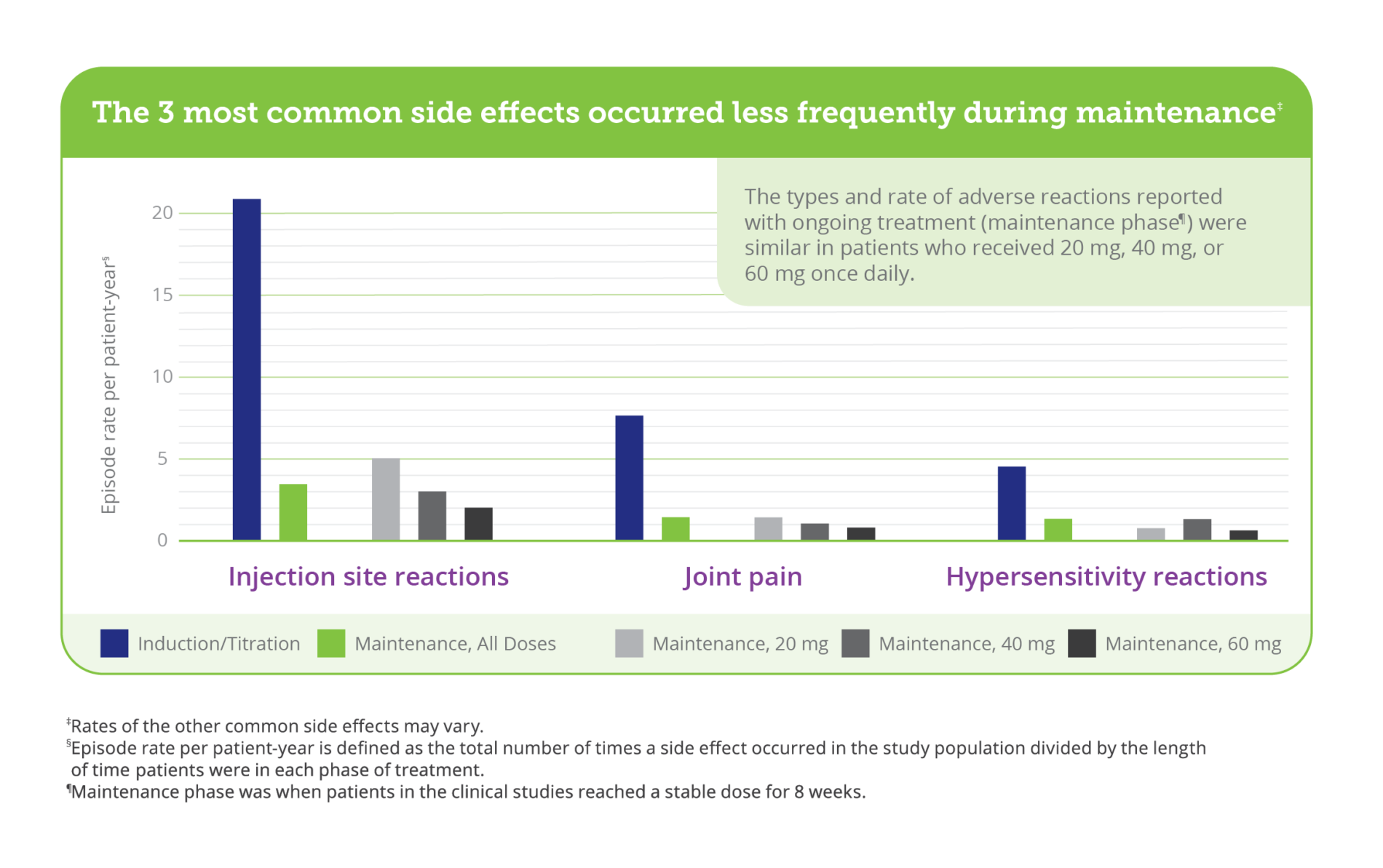
 

In studies, people had fewer common side effects as time passed, even if their dose went up

Graph showing common side effects

Watch a video about anaphylaxis

Anaphylaxis explained

This video will help you learn more about the potential risk of anaphylaxis with PALYNZIQ and how your care team will ensure you know how to respond if it happens.

Here’s how you can stay on track with your PALYNZIQ treatment plan

TRACK

your Phe levels so your clinic team can see how PALYNZIQ is working for you.

KEEP

all your appointments so your clinic team can adjust your treatment plan.

TAKE

all your medicines as prescribed. These can help reduce the risk of side effects.

FOLLOW

a consistent diet. Don’t make changes unless your clinic team tells you to do so.

KNOW

the signs of a severe allergic reaction.

CARRY

your autoinjectable epinephrine with you at all times.

The PALYNZIQ Risk Evaluation and Mitigation Strategy (REMS)

You can get PALYNZIQ only through the PALYNZIQ REMS program. The purpose of the program is to ensure that you have been fully informed about the risk of anaphylaxis associated with taking PALYNZIQ, and that you understand this risk before you start treatment. Your clinic team can tell you more about PALYNZIQ REMS and help you enroll.

biomarin logo

BioMarin Clinical Coordinators are available to support you throughout your treatment journey. They will work closely with you in person or over the phone to provide injection training and ongoing support and advice.

Stay up-to-date with news and updates about PALYNZIQ

Learn about insurance coverage and more

IMPORTANT SAFETY INFORMATION

What is the most important information I should know about PALYNZIQ?

PALYNZIQ can cause a severe allergic reaction (anaphylaxis) that may be life⁠–⁠threatening and may happen any time during treatment. Severe allergic reactions are a serious and common side effect of PALYNZIQ.

You will get your first injection under the supervision of a healthcare provider prepared to manage a severe allergic reaction. You will be watched for at least 1 hour after your injection for a severe allergic reaction.

  • If you have a severe allergic reaction during treatment with PALYNZIQ, you will need to receive an immediate administration of epinephrine and get emergency medical help right away.
  • Your healthcare provider will decide if you (or your caregiver) are able to give PALYNZIQ injections, to recognize the signs and symptoms of a severe allergic reaction, and how to use your epinephrine and call for medical help, if needed.
  • Your healthcare provider may ask an adult observer (or your caregiver) to be with you during and for at least 1 hour after each injection to watch for signs of a severe allergic reaction. If needed, they should be ready to give you epinephrine and call 911 to get medical help right away.

Stop PALYNZIQ and get emergency medical care right away if you have any of the following signs or symptoms of a severe allergic reaction during treatment with PALYNZIQ: fainting (passing out); dizziness or lightheadedness; sudden confusion; trouble breathing or wheezing; chest discomfort or chest tightness; fast heart rate; swelling of your face, lips, eyes, or tongue; throat swelling or tightness; flushed or red skin; skin rash, itching, or raised bumps on skin; nausea, vomiting, or diarrhea; losing control of urine or stools.

  • Your healthcare provider will give you a prescription for epinephrine and teach you (or your caregiver) and your observer, if needed, how to use it if you have a severe allergic reaction. Keep epinephrine with you at all times during treatment with PALYNZIQ. Read the Patient Information that comes with epinephrine for more details.
  • If you have a severe allergic reaction, stop taking PALYNZIQ until you talk with your healthcare provider. Tell them that you had a severe allergic reaction. They will decide if it is safe for you to keep using it.
  • Your healthcare provider may prescribe other medicines to take before your PALYNZIQ injection to help reduce the symptoms of an allergic reaction.
  • If your healthcare provider decides you can keep taking PALYNZIQ, you will receive your next injection under the supervision of a healthcare provider prepared to manage a severe allergic reaction, where you will be closely watched for at least 1 hour after your injection for signs of a severe allergic reaction.
  • Your healthcare provider will give you a PALYNZIQ Patient Wallet Card that lists the signs and symptoms of a severe allergic reaction. You (or your caregiver), or your observer, should call 911 right away if any of these signs or symptoms occur. Keep this card with you at all times while using PALYNZIQ. Show this card to any other healthcare provider who treats you.

PALYNZIQ REMS: PALYNZIQ is only available through a restricted program called the PALYNZIQ REMS (Risk Evaluation and Mitigation Strategy). Before you can receive PALYNZIQ, you must:

  • enroll in the program.
  • learn about the risk of a severe allergic reaction (anaphylaxis) from a healthcare provider certified in the PALYNZIQ REMS so you can understand the risks and benefits of treatment.
  • fill a prescription of epinephrine and carry it with you at all times while using PALYNZIQ.
  • keep the PALYNZIQ Patient Wallet Card with you at all times.

What should I tell my healthcare provider BEFORE starting PALYNZIQ?

Tell your healthcare provider about all the medicines you take, including prescription and over-the-counter medicines, vitamins, and herbal supplements.

Tell your healthcare provider about all of your medical conditions, including if you:

  • cannot or do not want to use epinephrine to treat a severe allergic reaction.
  • are pregnant or plan to become pregnant. It is not known whether PALYNZIQ will harm your unborn baby. Tell your healthcare provider right away if you become pregnant or think you might be pregnant while taking PALYNZIQ.
    • If your Phe levels are too high or too low during pregnancy, this may also affect your unborn baby. You and your healthcare provider can decide the best way for you to manage your blood Phe levels and if taking PALYNZIQ is right for you and your unborn baby.
    • It is very important to keep your Phe at the levels your healthcare provider recommends during pregnancy.
    • Pregnancy Surveillance Program. There is a pregnancy surveillance program for females who take PALYNZIQ during pregnancy, or who become pregnant while taking PALYNZIQ or within 1 month after their last dose of PALYNZIQ. This program collects information about the health of you and your baby while taking PALYNZIQ. To join, talk to your healthcare provider or call BioMarin at 1-866-906-6100.
  • are breastfeeding or plan to breastfeed. It is not known if PALYNZIQ passes into your breast milk. Talk to your healthcare provider about the best way to feed your baby if you take PALYNZIQ.

What are the possible side effects of PALYNZIQ?

PALYNZIQ may cause serious side effects, including:

  • Serious allergic reactions. See “What is the most important information I should know about PALYNZIQ?”
  • Other allergic reactions to PALYNZIQ can happen during treatment. Call your healthcare provider right away if you have any of the following symptoms of an allergic reaction including: rash, itching, or swelling of the face, lips, eyes, or tongue. Your healthcare provider may change your dose of PALYNZIQ, pause your treatment, or give you medicine for you to take before your injection to help reduce the symptoms of an allergic reaction.
  • Injection site infections. Serious infections at the injection site have happened in people during treatment with PALYNZIQ. Some of these injection site infections required hospitalization, surgery, treatment with antibiotics given through the vein, or stopping treatment with PALYNZIQ. Change (rotate) your injection site and check your injection site for redness, swelling, or tenderness before each injection. Tell your healthcare provider right away if you develop signs or symptoms of an infection at your injection site that are new, do not go away, or get worse, including: pain, redness, swelling, or tenderness; the area feels hard; fluid or pus; blisters; a dark scab; an open wound.

    Do not inject PALYNZIQ into the affected area until the infection has cleared.

  • Low levels of Phe in your blood (hypophenylalaninemia, or HypoPhe). Your healthcare provider will monitor your blood Phe levels during treatment.

The most common side effects of PALYNZIQ include: injection site reactions: redness, itching, pain, bruising, rash, swelling, tenderness; joint pain; allergic reactions; headache; skin reactions that spread and last at least 14 days, such as itching, rash, redness; nausea; stomach pain; vomiting; cough; mouth and throat pain; itching; diarrhea; stuffy nose; feeling very tired; dizziness; anxiety; low levels of Phe in your blood.

The most common side effects of PALYNZIQ in people 12 years to less than 18 years of age include: injection site reactions: redness, itching, pain, bruising, rash, swelling, tenderness; joint pain; headache; fever; allergic reactions; dizziness; nausea; vomiting; feeling very tired; pain in your arms or legs.

These are not all the possible side effects of PALYNZIQ. Call your healthcare provider for medical advice about side effects.

You may report side effects to FDA at 1-800-FDA-1088 or www.fda.gov/medwatch.

Important notes

Blood Phe testing and diet

  • Your healthcare provider will monitor your blood Phe levels during PALYNZIQ treatment.
  • Monitor the amount of protein and Phe you eat or drink. Your healthcare provider may change your diet based on the amount of Phe in your blood. Follow your healthcare provider’s instructions about the amount of protein and Phe you should have in your diet.

Missed dose

  • If a dose is missed, take the next dose at the regular time. Do not take 2 doses of PALYNZIQ to make up for the missed dose.

Please see full Prescribing Information, including Important Warning, and the Medication Guide.

COM-ET-1199 02/26

What is the most important information I should know about PALYNZIQ?

PALYNZIQ can cause a severe allergic reaction (anaphylaxis) that may be life⁠–⁠threatening and may happen any time during treatment. Severe allergic reactions are a serious and common side effect of PALYNZIQ.

What is PALYNZIQ?

PALYNZIQ® (Pal-lin-zeek) (pegvaliase-pqpz) is a prescription medication used to lower blood levels of phenylalanine (Phe) in people 12 years and older with PKU (phenylketonuria) who have uncontrolled blood Phe levels above 600 micromol/L (10 mg/dL) on their current treatment. You should discuss the potential benefits and risks of PALYNZIQ with your healthcare provider.