I try to find ways to be more efficient and more mindful and make sure that I’m dosing correctly.
—Leo
Watch PALYNZIQ stories

Finding his rhythm and taking PALYNZIQ
The first injection will be under the supervision of a healthcare provider. After that, you’ll start by self-injecting PALYNZIQ once a week. Then, your clinic team will adjust your dose based on how you respond to treatment. Your PALYNZIQ dose will be increased slowly so your body can get used to it.
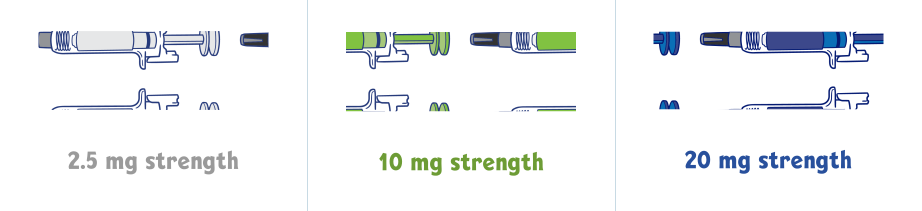
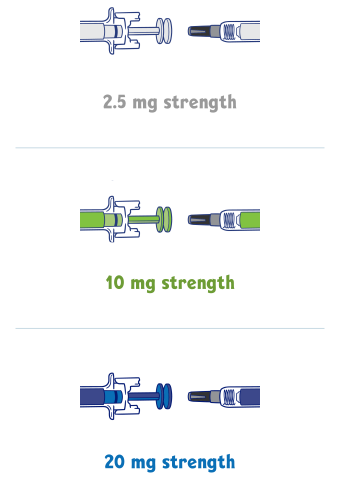

The PALYNZIQ needle is small and thin—it’s just half an inch long. It is injected right under the skin (subcutaneously). This can make it less painful than a flu shot, which is injected into your muscle.
Did you know?

Your highest dose may not be the dose you stay on. YOUR CLINIC TEAM WILL MONITOR YOUR PHE LEVELS and may decrease your PALYNZIQ dose.

I try to find ways to be more efficient and more mindful and make sure that I’m dosing correctly.
—Leo
Watch PALYNZIQ stories
A step-by-step guide on how to inject PALYNZIQ
Learn about injecting and administering PALYNZIQ with this step-by-step video.
16:12

Overcoming the fear of needles
Get comfortable with needles and injections with an overview of the education and support you’ll receive with PALYNZIQ.
09:33

Anaphylaxis explained
Learn more about the potential risk of a severe allergic reaction with PALYNZIQ injection.
10:35
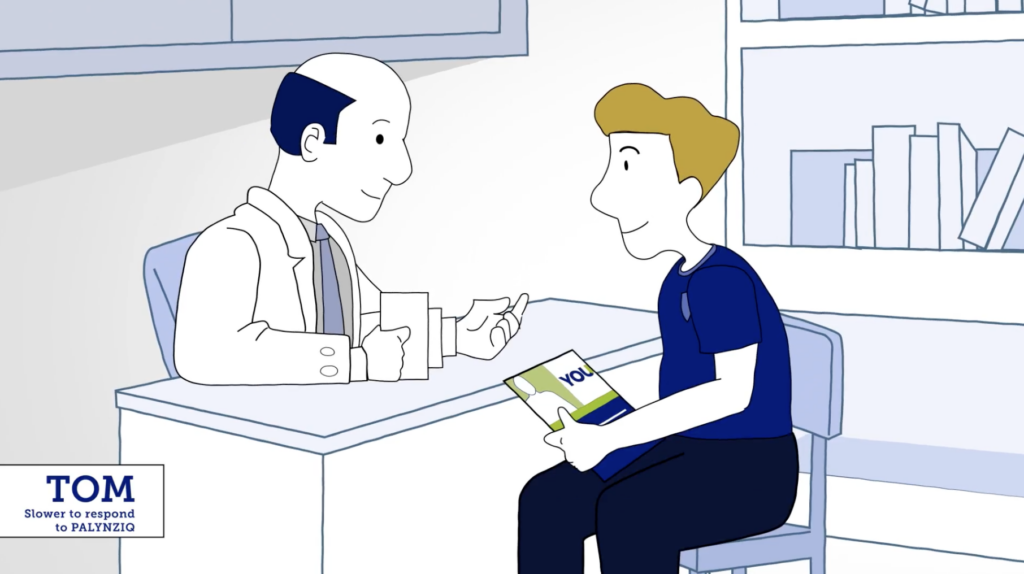
Responding to PALYNZIQ Therapy
Learn how the immune system responds to PALYNZIQ and how you’ll be supported as you work toward lowering your Phe levels.
11:42

TRACK your Phe levels with regular testing.

KEEP all your appointments with the clinic team.

TAKE all your medicines as prescribed by your healthcare provider.

FOLLOW a consistent diet. Don’t make changes unless your clinic team tells you to do so.

REPORT any side effects to your clinic team right away.

KNOW what signs to watch for and what to do if anaphylaxis occurs.

CARRY your epinephrine device at all times during treatment with PALYNZIQ.

Get matched with someone taking PALYNZIQ who has walked in your shoes.

The right clinic team can help you on your PALYNZIQ journey.
What is the most important information I should know about PALYNZIQ?
PALYNZIQ can cause a severe allergic reaction (anaphylaxis) that may be life–threatening and may happen any time during treatment. Severe allergic reactions are a serious and common side effect of PALYNZIQ.
You will get your first injection under the supervision of a healthcare provider prepared to manage a severe allergic reaction. You will be watched for at least 1 hour after your injection for a severe allergic reaction.
Stop PALYNZIQ and get emergency medical care right away if you have any of the following signs or symptoms of a severe allergic reaction during treatment with PALYNZIQ: fainting (passing out); dizziness or lightheadedness; sudden confusion; trouble breathing or wheezing; chest discomfort or chest tightness; fast heart rate; swelling of your face, lips, eyes, or tongue; throat swelling or tightness; flushed or red skin; skin rash, itching, or raised bumps on skin; nausea, vomiting, or diarrhea; losing control of urine or stools.
PALYNZIQ REMS: PALYNZIQ is only available through a restricted program called the PALYNZIQ REMS (Risk Evaluation and Mitigation Strategy). Before you can receive PALYNZIQ, you must:
What should I tell my healthcare provider BEFORE starting PALYNZIQ?
Tell your healthcare provider about all the medicines you take, including prescription and over-the-counter medicines, vitamins, and herbal supplements.
Tell your healthcare provider about all of your medical conditions, including if you:
What are the possible side effects of PALYNZIQ?
PALYNZIQ may cause serious side effects, including:
The most common side effects of PALYNZIQ include: injection site reactions: redness, itching, pain, bruising, rash, swelling, tenderness; joint pain; allergic reactions; headache; skin reactions that spread and last at least 14 days, such as itching, rash, redness; nausea; stomach pain; vomiting; cough; mouth and throat pain; itching; diarrhea; stuffy nose; feeling very tired; dizziness; anxiety; low levels of Phe in your blood.
The most common side effects of PALYNZIQ in people 12 years to less than 18 years of age include: injection site reactions: redness, itching, pain, bruising, rash, swelling, tenderness; joint pain; headache; fever; allergic reactions; dizziness; nausea; vomiting; feeling very tired; pain in your arms or legs.
These are not all the possible side effects of PALYNZIQ. Call your healthcare provider for medical advice about side effects.
You may report side effects to FDA at 1-800-FDA-1088 or www.fda.gov/medwatch.
Blood Phe testing and diet
Missed dose
Please see full Prescribing Information, including Important Warning, and the Medication Guide.
COM-ET-1199 02/26
What is the most important information I should know about PALYNZIQ?
PALYNZIQ can cause a severe allergic reaction (anaphylaxis) that may be life–threatening and may happen any time during treatment. Severe allergic reactions are a serious and common side effect of PALYNZIQ.
What is PALYNZIQ?
PALYNZIQ® (Pal-lin-zeek) (pegvaliase-pqpz) is a prescription medication used to lower blood levels of phenylalanine (Phe) in people 12 years and older with PKU (phenylketonuria) who have uncontrolled blood Phe levels above 600 micromol/L (10 mg/dL) on their current treatment. You should discuss the potential benefits and risks of PALYNZIQ with your healthcare provider.